by Jenna | Nov 16, 2010 | Writing Articles
One of the participants at my recent retreat shared this powerful quote from Barbara Sher, “Isolation is a dream killer.”
Similarly, my teacher Sonia Choquette says, “You cannot do it alone.”
How true!
As a sensitive woman, mother, home-based business owner, spiritual coach, intuitive, hand analyst, and ready-to-take-the-world-by-storm creative writer, I can tell you that the hardest days are when I feel like I have no one to turn to and there’s no one else out there who gets who or where I am. Luckily, I’ve learned a few things about this along the way.
When it comes to making your dreams real, here are a few things to keep in mind:
1. Your nascent vision is like a tiny seedling. Plant it in fertile soil, water it, nurture it, and protect it. Don’t put it somewhere it could be trampled on. Share it only with your best supporters.
2. Get the right support from the right people. You must have “believing eyes” to witness your project into wholeness. Do not allow the naysayers and doubters to topple your tiny creation before it learns to stand on its own two feet.Get in touch with your supporters when you need them, and do the same for them. Make sure you have a balanced, equal exchange with people who are emotionally whole enough to truly be there for you.
3. Dream big or stay at home. Don’t hold back from your vision — go all the way with it. Push yourself to your creative edge. Ask, “How can I take this to its next greatest level of expression?” If you need help pushing yourself to that precipice, you’re in the right place. You’ll be seeing more from me modeling this very, very soon (stay tuned!).
4. Don’t take your critics too seriously. Like most of us, you probably make the mistake of listening to criticism (from yourself or from other people) far too early in your creative process. Your inner critics are speaking from fear and doubt, and your outer critics are doing the same. Very often, your outer critics are simply projecting their own fear and excuses onto you. So take it with a grain of salt. And turn to your supporters to get you back on track when you make the mistake of listening to the wrong voice.
5. Trust yourself, first. So often you dismiss your greatest, deepest truths because you think they are too simple, too complicated, too unrealistic, etc. But if you simply allow yourself the permission to explore what your inner voice is telling you, miraculous things can happen. You may want and need to have your inner truths heard and witnessed before you’re willing to give ourselves that permission.
That’s where your supporters or coach come into play. Either way, sometimes allowing yourself to voice your vision to the right listeners is just the powerful kick-start you need to make your dream become a reality.

by Jenna | Oct 26, 2010 | Reflections, Writing Articles
Artists, visionaries, and healers face the intense darkness of creativity on a daily basis.
Robert Johnson, author of Owning Your Own Shadow, writes about “why so many creative people have such a miserable time of it. . . . Narrow creativity always brings a narrow shadow with it, while broader talents call up a greater portion of the dark.
“While those with the largest talent seems to suffer most, we all must be aware of how we use our creativity — and of the dark side that accompanies our gifts…. all these [creative] acts will have an equal weight on theopposite side of the scale and lead us into [destructive behaviors].”
So when we create, we face the necessity of destruction to balance our creativity. Our “positive” behavior must be balance by “negative” behavior.
“There is, however,” Johnson writes, “a broader kind of creativity that folds the darkness into the finished product and finds fulfillment in the shadow.”
Creativity is essentially a birthing process, but it evokes death as well.
Here’s what I mean: One of my colleagues reminded me recently that creating anything requires a metaphorical death. Your ego has to die in order to let go enough to bring your creative vision into theworld. You have to embrace an attitude of reverent surrender and to shift into an internal space that’s connected with the divine, rather than the ego, in order to create. Fear and all. No guts, no glory.
In other words, in order to birth our ideas and visions, we have to die. DIE! No wonder it’s so incredibly terrifying to create.
It requires a huge leap into the unknown, a leap of courage, even just to begin.
And no wonder we have so many excuses not to create: Too busy, too tired, too stuck. Don’t care anymore. You know the drill.
But at end of the day, our excuses not to create are manifestations of your fears about birthing our creative work into the world.
Since birthing isn’t pretty or easy, that’s no surprise.
We have to be able to walk into the darkness, transcend the huge void between the light and thedarkness, get down on our knees in abject surrender, and give it everything we’ve got in order to bring what we’ve been given back into this earthly plane.
If you’re not doing that, you’re probably playing too small. A lot to live up to, right?
Interestingly, in our culture, you’re trained to hide from your darkness, to put a pretty face on it, and not to mention it. Not to appreciate it. But that’s where the true jewels lie. All that tension, that angst, that creative frustration is actually a huge untapped energy source, just waiting to be released in a glorious explosion of full, whole-bodied creative expression.
As Johnson says, “We are … talking about sainthood in the original meaning of the word — a full-blooded embracing of our own humanity, not a one-sided goodness that has no vitality or life.”
How can we bring our darkness — shadow — into our creative expression and thereby find our own true “sainthood”?
How can we release being “good” to find our true self-expression?
Worth thinking about.
by Jenna | Jul 13, 2010 | Science Fiction, Writing Articles
I’ve recently been obsessed with George Lucas, creator of the Star Wars saga and other blockbuster films, which has led to all sorts of interesting reading and web exploration. Many people seem to believe Lucas has gone over to the “Dark Side” himself, only “in it for the money” with his projects (we’ll have to talk about that another time), but I’ve always found him to be an inspiring visionary.
Here’s why I’m interested: I believe that we can learn from successful, creative geniuses about how to bring our dreams to fruition.
I recently re-watched a documentary about the making of the original Star Wars trilogy. The insider’s look at the creation of a grand vision is utterly compelling.
What I love about watching George Lucas in action — particularly the George of the 1976 Star Wars production era — is seeing his absolute dedication and unshakable commitment to the creation of his art, his way.
Again and again, he steered clear of involvement with the Hollywood studios as much as he could (particularly later in the film series), and found ways to maintain his independence, like retaining merchandising rights (even when it wasn’t clear there would be a popular market for the merchandise).
He worked and reworked his script to be as precise as possible and checked and rechecked his story themes to make sure he was conveying the powerful mythological messages and meanings he wanted to convey.
He repeatedly overcame what looked like insurmountable odds to bring his vision to reality. With the first film, schedules were massively delayed, props were malfunctioning, costumes and sets weren’t living up to his vision, budgets were falling by the way side, and the studio was threatening to pull the plug, but still he kept on.
Clearly, Lucas experienced his own hero’s journey to create his films, along the lines of the story he tells of Luke Skywalker facing his own shadow and obstacles, reaching deep within himself to grow and expand into who he is meant to be and what he is meant to do in the world.
So what is it that enables one creative visionary to succeed, where another might fail? What can we learn from George Lucas about how to make our own visions real?
Here are 6 principles I’ve gleaned from him so far:
1. If you can see it, it must be possible. People around Lucas would tell him that something couldn’t be done, and he’d say, “Don’t worry about how we’re going to do it.”
I’ve always believed that if I can see something, there has to be a way to create it, even if I can’t see how yet. That’s how I’ve taught myself so much of what I’ve learned, and created so much of what I’ve created.
Interestingly, many technological advances are first devised in science fiction circles — and then the scientists figure out how to make it so.
If you have a creative vision, treat it with sacred respect, trust it, and get to work.
2. Stay true to your vision. Repeatedly, the people who worked with him would say that Lucas’ vision and passion for the idea were what made it all possible. They were obviously in awe of his ability to hold the vision, even when they couldn’t see it themselves.
Are you clear on the big idea of your vision and ready to see it through to the end, even if you don’t know exactly how you’re going to get there?
Find what you LOVE about it, remind yourself WHY you’re doing it, and go for it. Passion and perseverance will carry you through.
3. Delegate. A true visionary enlists other talented, dedicated, and creative supporters to help him or her make a vision real. George Lucas repeatedly hired other directors, screen writers, and editors, for instance, despite having those skills himself, because he knew he couldn’t be in the trenches and hold the big vision.
4. Be a strong leader. Although the pressure was intense, Lucas never seemed to waver or give up. Powerful leadership requires an unshakable faith in purpose and direction. Be clear on yours and retain your independence. It’s YOUR vision after all.
5. Be flexible. At the same time, be flexible, and allow your team to support you.
One of Lucas’ directors, Irvin Kershner, disagreed with him on a key line (where Han Solo says, “I know” in response to Leia’s “I love you” in the second film). Lucas thought it was a mistake, but went with it for an early screening. The audience loved it and talked about endlessly — so George left it as it was. He was flexible.
6. Trust your feelings. The concept of “The Force” in the Star Wars saga is the thread that weaves together both a teaching from the films and from Lucas’ creative legacy. Lucas knows the importance of developing and mastering our own emotional intelligence. Clearly he has followed his own, time and again, despite obviously massive outside pressure to conform to various norms and expectations.
From my perspective, this is all about trusting your own inner wisdom, even if it doesn’t make sense on the surface.
After all, every Jedi master knows that our eyes can deceive us.
by Jenna | Sep 9, 2009 | Writing Articles
Just saw this on Twitter via @Kaypearl from @bitrebels.
The detail is amazing, and I love all the “round pegs” and “rebel” references. Click the links below the image to see the full image and to click through to the artist’s gallery.
Wow.
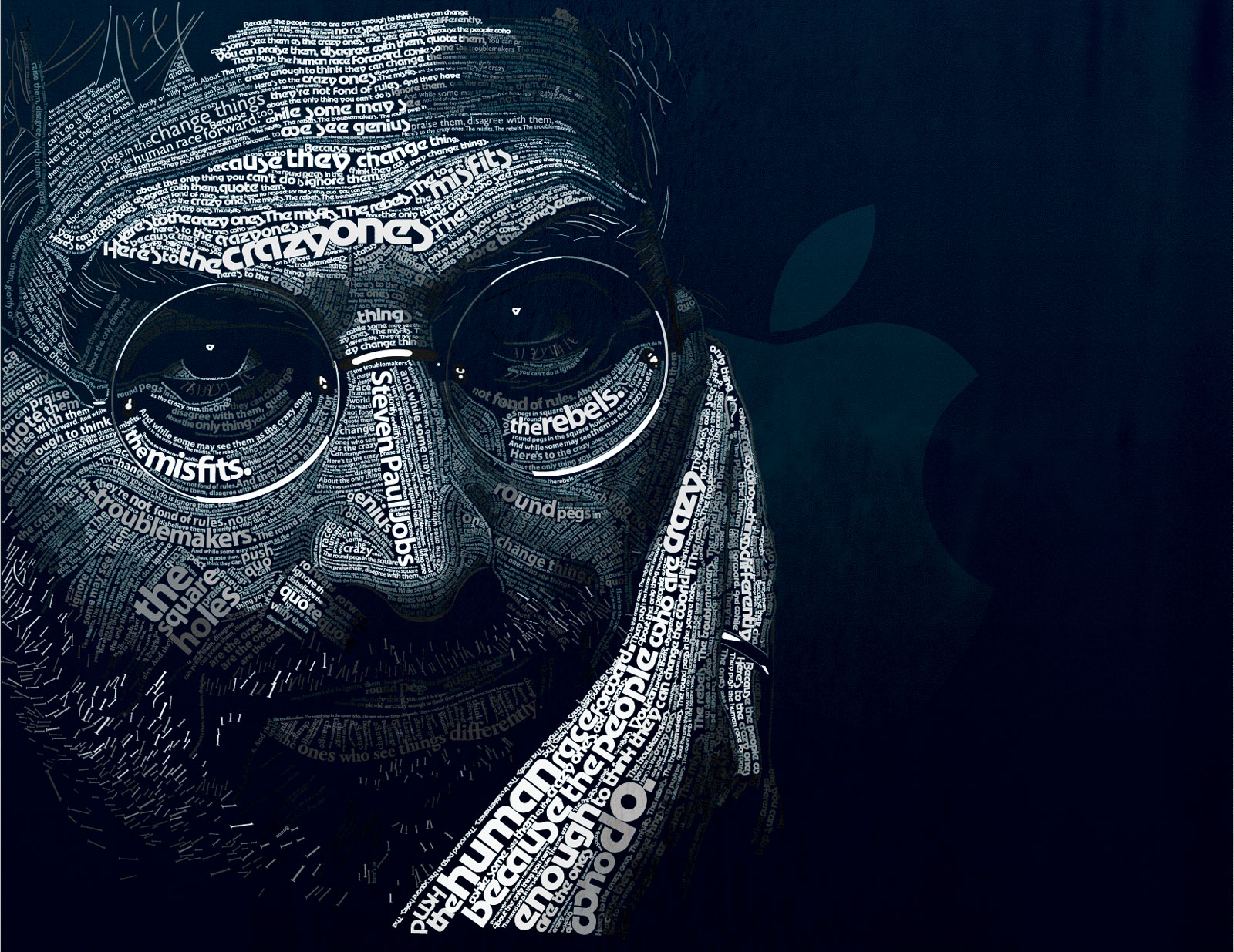
Steven Paul Jobs by ~dylanroscover on deviantART
by Jenna | Sep 5, 2009 | Writing Articles
From an article about Fostering Innovation using Brad Bird's lesson from Pixar.
(Note, these are renumbered from the original article because there were actually 10, not 9, as indicated in the text)
- Herd Your Black Sheep: “Give us the black sheep. I want artists who are frustrated. I want the ones who have another way of doing things that nobody’s listening to. Give us all the guys who are probably headed out the door.”
- Perfect is the Enemy of Innovation: "...there are some [scenes] that only need to be good enough to not break the spell."
- Look for Intensity: "Involved people make for better innovation"
- Innovation Doesn’t happen in a Vacuum: "...if we can interconnect all our strengths, we are collectively the greatest animator on earth."
- High Morale Makes Creativity Cheap: "...the thing that has the most significant impact on a movie’s budget—but never shows up in a budget—is morale."
- Don't Try To “Protect your success:” "The first step in achieving the impossible is believing that the impossible can be achieved..."
- Steve Jobs Says ‘Interaction = Innovation:’ "People are allowed to create whatever front to their office they want.... if you have a loose, free kind of atmosphere, it helps creativity."
- Encourage Inter-disciplinary Learning: "...encourages people to learn outside of their areas, which makes them more complete [and more creative]."
- Get Rid of Weak Links: "Passive-aggressive people—people who don’t show their colors in the group but then get behind the scenes and peck away—are poisonous."
- Making $$ Can’t Be Your Focus: "Walt Disney’s mantra was, 'I don’t make movies to make money—I make money to make movies.'”
What I love about these thoughts is the outside-the-box thinking that focuses on creativity, results, risk, and morale, simultaneously. As someone who is accustomed to coaching clients who "don't fit in," I love seeing such powerful results coming from NOT fitting in and not valuing fitting in. It's so refreshing.
It's my sense that we all have a lot to learn from these creative visionary types who see things differently, are willing to say so, and are willing to match their money and their efforts with their beliefs.
by Jenna | Jul 19, 2005 | Writing Articles
One of my all-time favorite movies is “Joe Versus the Volcano” with Tom Hanks and Meg Ryan.
The horror of the opening sequence when Joe goes to work in the morning makes me cringe in delighted horror.
If you haven’t seen it, a very washed-out, sickly-looking Joe approaches a dark factory, marching along in a line of stumbling, automatons in dark business suits, trampling the lone, brave, bright yellow flower audacious enough to eke out an existence between the cracks of the dismal concrete pathway.
Once inside, Joe sits in an office without windows, tortured by the incessant flickering of fluorescent light bulbs going bad, listening to his co-worker’s constant sniffling and his boss’s endlessly repetitive telephone conversations. And all this not to mention the fact that Joe has a pointless, bureaucratic job devoid of meaning. It’s enough to make a sensitive soul tremble in terror.
And when I compare this movie to the typical, modern-day work experience, it doesn’t seem so far off despite its exaggerations, especially for a sensitive soul. Anonymous cubicles, fluorescent lights, limited privacy, meaningless work. It’s no wonder we have such trouble finding satisfaction!
But that’s not really why I love the movie.
What I see embodied within the film is the hero’s journey – a return to true self. Joe goes from being a hypochondriac to a vibrant, life-filled being because he is finally willing to say “No” to what no longer serves him.
He finds joy in life by engaging life – and by living with courage and curiosity. He is given the gift of a giant wake-up call (albeit a false one) that finally gets his attention. His misguided belief that he is going to die inspires him to consider a new way. He starts to speak his truth — he tells people what he really thinks — and he doesn’t hold back or play it safe. He quits his soul-sucking job and finally starts to LIVE.
Like Joe, salvation is possible for us when we take the time to discover our true selves, learn to see the joy in life again, and let go of what is dragging us down. So what are you holding back from? How are you playing it safe? What are you ready to let go of? How are you longing to be free?
Remember, it’s never too late to start now.