Sci-Fi Circuit: Insights from ‘The Ark’
My Sci-Fi Circuit article on Script Mag originally published on February 3, 2023.
Dean Devlin’s new sci-fi series, The Ark, debuted February 1, 2023 at 10 p.m. ET/PT on Syfy and on February 2 on Peacock and Electric Now.
Devlin, the creator of Independence Day and the original Stargate, teamed up with longtime collaborator Jonathan Glassner (Stargate SG-1) to create this new, contained sci-fi series set in the high-stakes world of a colony ship running on fumes to reach its final destination: A new planet for humanity to claim.
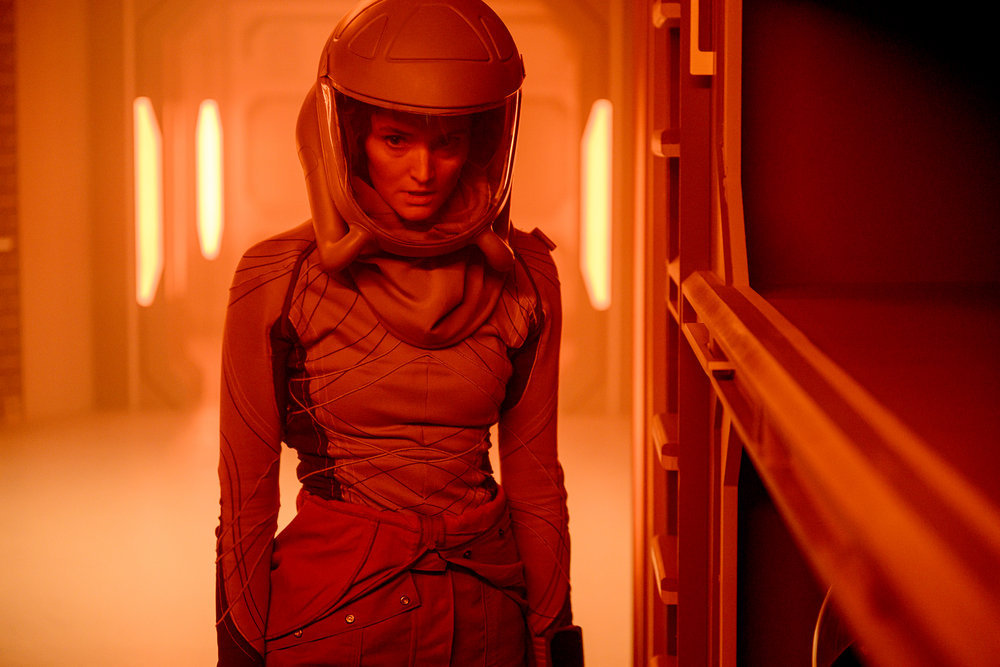
The Ark begins 100 years from now with the first planetary colonization mission designed to ensure the survival of the human race, leaving behind a planet Earth dying under the impacts of climate change. But when their ship, Ark One, is disastrously impacted by an unknown object, much of the command crew is killed and the remaining crew members are awakened early from cryogenic stasis. They’re quickly thrust into facing one challenge after another simply to stay alive, confronting dangerous system failures and limited resources — including “little” things like food, oxygen, and water.
Alongside the life-and-death stakes of a damaged ship outfitted for a sleeping crew — ill-equipped to house and feed an active crew still a full year out from their final destination — the series is riddled with intriguing mysteries from the get-go. What hit the ship and caused such catastrophic damage? What’s going on with the various interpersonal relationships between the characters, of whose backstory we get only tantalizing glimpses?

The characters also wrestle with sorting out their chain of command, because their higher ranking crew mates are lost in the accident, pushing them into direct and frequent conflict. They’re also quickly swept up into a murder mystery to solve. The first four episodes, which I screened before chatting with Devlin and Glassner, set up a number of intriguing storylines and possibilities I expect will grow richer over the course of the 12-episode season and as the characters develop more fully.
Devlin’s goal was to create “a microcosm of our world,” saying, “The fun of a spaceship show is that you can really turn it into a pressure cooker. So, we had this uniting problem that they need to survive, but what else could happen that divides them? So, we wanted mystery. We wanted complexities. We wanted different philosophies on how to rule or how to run things, and to watch that clash together.”
With overtones of Lost In Space and Battlestar Galactica, The Ark stars the fresh faces of Christie Burke, Richard Fleeshman, Reece Ritchie, Stacey Read and Ryan Adams, all of whom bring a bright energy to a new adventure story set in space.
When I asked Devlin and Glassner about how things have changed in the world of sci-fi, and what they see coming next, Devlin recalled his path to getting the original Stargate movie made, saying, “Obviously, I grew up in a time of fantastic science fiction, whether it was Star Trek or Silent Running or Omega Man, but science fiction fell out of fashion. And when I did the feature film Stargate, every single studio passed on it. They all said, ‘Science fiction is dead.’ And I said, ‘No, just bad science fiction is dead.’

“Finally we got MGM to release it — only because they had a hole in their releasing schedule — and it was a gigantic hit. And suddenly sci-fi was back in fashion again. It’s been fun to watch it ebb and flow. Probably the biggest difference with science fiction now is it’s finally being treated like it’s not a second-class citizen. For the longest time science fiction was relegated to, ‘Oh, that’s just for the kids.’ But now science fiction is taken seriously and that’s a great thing.”
Devlin also commented on the way streaming has changed the world of sci-fi, because so much more scripted entertainment is possible now. When he was growing up, the few networks around were careful about losing their market share or making mistakes with television shows. But because movies were “falling apart” back then, they more or less “handed the keys to the kingdom to these hippies, and they created these unbelievable movies because nobody was really paying attention to what they were.” Now, though, he says, “you’ve got kind of the exact opposite. Movies cost $200 to $300 million to make and no one wants to screw them up, so they’re overly handled. But television — with all these different platforms — there’s more scripted entertainment now than ever, and the only way to get noticed is to do something different, to take a chance to be riskier. So, we’re living in a time where we’re actually seeing some of the better writing, but it’s happening on television.”
Devlin is quick to credit Glassner with teaching him about TV writing, saying, “I had never done serialized television until Jonathan and I worked together the first time on a show called The Outpost. He taught me so much about serialized writing and storytelling. I wrote The Ark pilot and set it up at Syfy, but the second Syfy wanted to do it, my first call was to Jonathan saying, ‘Please come on board with me on this,’ and I’m so grateful he said, ‘Yes.’ And I have to give him so much of the credit for the development of this show. Because once I had set it up, I put the baby in his arms and he did just this miraculous job with it. I was almost never in the room, John ran the room, did all this, and then he would come back to me and then he and I would work kind of separately, but he did so much of the heavy lifting on this show, and I’m so grateful for him.”

For his part, Glassner seems to have fallen for the show based on the characters. “For me, any television — whether it’s genre or not — is about the characters. And Dean created some great characters on the show, and we got very lucky and cast some great actors to play those characters. And from there it really just flows. There’s so much to explore with these characters and they’re put in such an amazing situation in which to explore them.”
Although Devlin wrote the pilot script, Glassner then primarily ran the writers’ room with two other writers, taking things back to Devlin to work on between the two of them. “We run it much like any other serialized television show,” he said. “We boarded pretty much the whole season before we started writing, and then we figured out where to reveal what and when.”
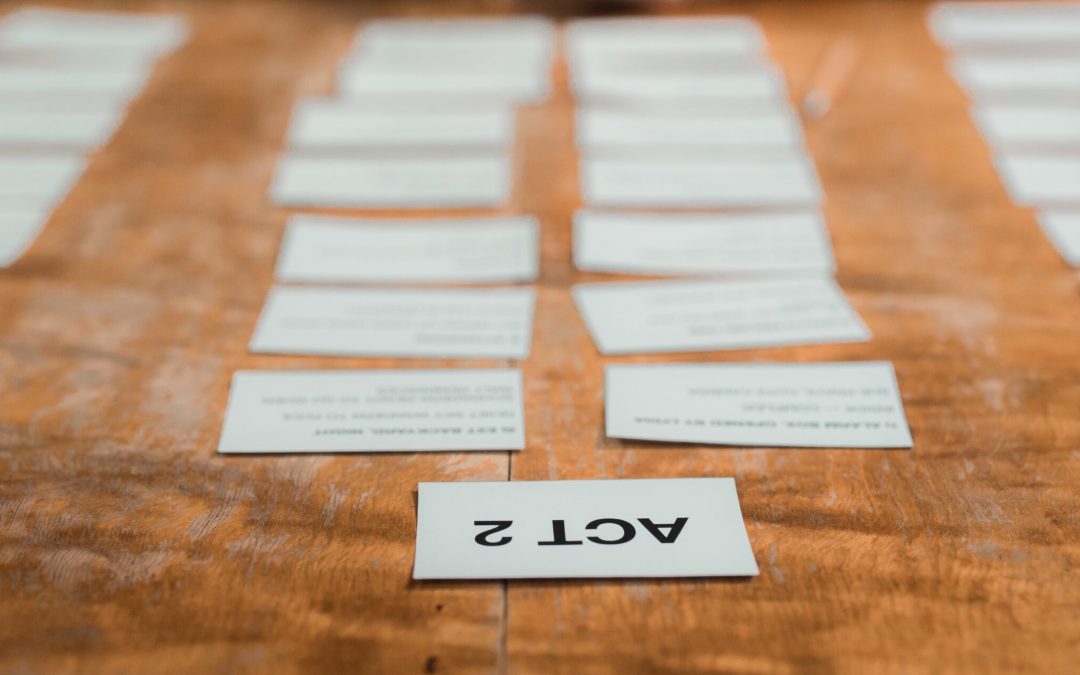
The team met in a Zoom room because they were just coming out of Covid when writing it. About meeting over Zoom, Glassner says, “Aside from the social aspect of it — because I missed the contact and the camaraderie, the joking around and stuff — Zoom works better for me because of the computerization of it. We have the board on one screen, and we can literally drag things around on the board, and cut and paste and all those great things, which you can’t do so easily with real cards on a real board. So, things actually move a little more quickly, and it’s easy to save the board and then say, ‘Now let’s try this, and move everything around. And if that didn’t work, go back to the other one. So, if we went back into a room, I’d probably still use the electronic board.”
As a sci-fi writer myself, I asked Devlin and Glassner about what tips they have for sci-fi writers wanting to break into the genre. Glassner commented, “you need to be a fan of the genre.” (No problem there!) “I’ve had writers come in and pitch who clearly don’t watch science fiction, don’t read science fiction, and that doesn’t usually work unless the concept they’re working on is something so completely new and different and doesn’t have really have any of the traditional science fiction in it.”
Devlin added, “The thing is, with science fiction it’s almost impossible to do a science fiction show that does not have roots in something else. So, if you don’t love those roots, if you don’t know what you’re referencing, the sci-fi fans will. I couldn’t agree with John more. We write this stuff because we actually like it, right? This is what we love. I once in my life had the privilege of making a movie with Martin Scorsese and I can tell you that his love and passion for art house movies is the same as my passion for genre. They’re equally as intense. One has Oscars, the other doesn’t, but to do this well, you have to really love it.”
I also asked about climate storytelling, something that’s becoming (thankfully) more commonly talked about amongst filmmakers, such as NRDC’s Rewrite the Future event recently at Sundance Film Festival.
In The Ark, the cli-fi aspects are “really just the backstory,” according to Glassner. “I don’t know that if I or if anyone can write a show or a story that’s just about climate change, but if so, go for it. I can’t imagine doing it. There’s so much science involved that to make it interesting as a piece of fiction is going be very challenging.”
Devlin agreed, ruefully recalling his experience with Geostorm trying to create a climate-focused story: “I did it and failed spectacularly. When I did Geostorm, it all started because my daughter, who was eight at the time, turned to me and asked me about global warming and climate change. And I tried to explain it to her as best I could. And she looked at me and she said, ‘Well, why can’t we just build a machine to fix it?’ And that was the genesis of Geostorm. But as we went to make the movie, I discovered the studio didn’t want to ever say ‘climate change.’ And so suddenly we were trying to make cli-fi movie where we’re not allowed to really talk about climate change . . . and we all know how good that movie came out.”
He added, “On this show, we’ve had nothing but support from our creative executives at Syfy. They haven’t asked us to back away from anything. And when that happens, you really can tell stories that are about something else, even though you’re hiding it in the guise of science fiction.”

We laughed over the benefits of having 3D modeling and CGI to create the spaceship and other visual effects for the show alongside the cons of weeks of rendering time required to create the exterior space sequences and effects for the series. “Traditionally digital effects are more expensive than models, right? The hardest part is rendering. We built a very, very complex digital model of the spaceship so that we could go very, very close and have it be photo-real. But it means every single time you do a shot, you’re looking at three, four weeks of rendering. So, on a television budget such as ours, it’s very difficult. And Jonathan and I have big appetites for what we want to do on screen, and those appetites far exceed our budget or the time we have to do it. So literally — luckily Jonathan’s also a director, as I am — we reach into the bag of tricks every single time to try and solve the problem. How do we do what we want to do without curbing our appetite?”
Talking further about the impacts of streaming on writing and creating sci-fi, Devlin says, “The danger is some of these platforms look to science fiction to be their big event. And so they’re overly focused on the digital effects and the scope at this scale. And you can have the greatest, most expensive effects of all time, but if you don’t care about the story and the character, you don’t have a show. And conversely, you can have [more] mediocre effects if you have a really good story and really good characters. People are very forgiving if they’re emotionally connected. So, the danger going forward is if we focus on the wrong elements of science fiction, and forget that at the end of the day, it’s always about character and story.”
As far as the rest of the season? Devlin invites us to join him for many more mysteries to come. “Hopefully surprises,” he says. “Hopefully the journey’s going to take some twists and turns and hopefully you don’t see them coming. And even if you do, hopefully you enjoy them . . . be surprised by where the characters go, where the story twists, stay compelled by these people, and be rooting for (at least some of) them.”
Considering the list of pending spoilers past the four episodes I’ve already seen and I’m not allowed to talk about, I’m highly intrigued to see what happens next. When I asked Devlin and Glassner about their long-term vision for the series, they confessed that they “both feel it’s a big mistake when shows overstay their welcome and go on beyond it. And so we made a plan and said, ‘Look, no matter what, we’re not going past 18 seasons.’ That’s it, 18 years, and then we stop no matter how much more we want to write.”
In all seriousness, they shared that along with the secrets, twists, and turns, we’ll see a little bit more backstory this season as the story unfolds, more about some of the characters, and “if we’re lucky enough to have another season, we’ll probably do a little more” in the way of backstory.
In closing Devlin shared, “The underlying theme of the whole thing — which is something that Jonathan and I share — is a great deal of optimism about the human spirit. And that’s really where we wanted to focus on with this show. It’s fashionable nowadays to be super dark and edgy and that can make very compelling television, it’s fun to watch — but I don’t want to live there. Jonathan doesn’t like to live there. And so this show is really about the triumph of the human spirit.”
Fantastic.
[Original article on Script Mag]
Featured image by Aleksandar Letic/Ark Tv Holdings, Inc/SYFY