
by Jenna | Sep 9, 2015 | Writing Articles
Ordinarily I recommend writing first and cleaning later. I stand by that today, too. Do your writing, then clean your writing desk.
But today is still a good day to clean your desk.
Here's why.
As Fall takes shape, you're likely to start experiencing that "back to school" energy we all usually start feeling around now. You're probably even be feeling it already.
If you're like me, you're might be right between that lazy summer-just-ended feeling and sensing the forces of Fall coming down the pike. My older boy just started school and I can tell that I'm about to get swept up in the wave of production that usually strikes around now.
But it's not quite here yet, at least not for me -- today might actually be the first time I'm really starting to feel it as opposed to just knowing that it's coming.
Whether you're still in that in-between place, or ready to Get Moving, cleaning your space of the accumulated muck that's built up over the summer is a perfect way to transition into this productive phase and be ready to make the most of it.
For desk cleaning, here are a couple of tricks that work for me when I have limited time:
- Triage the mess and sort it into what-goes-where piles. Hopefully a lot of it will go straight into the recycling bin. One of my favorite tricks from Miriam Ortiz Y Pino is to use a "Belongs Elsewhere" box that I can toss things into that belong elsewhere in the house but have snuck into my space over time (those evil little monsters!).
- Put away what you can right now.
- Put the rest into a stack to sort later.
- Clean the desk surface.
- Behold the magnificence of your clear workspace.
- Get back to the writing. :)
- Over time, develop a system for the what-goes-where issues you discover as you clean and so the mess is less to deal with next time. (Miriam is great at helping with this. One of the best things about my office is that even though it's messy on top right now it's well organized underneath the chaos.)
And while you're cleaning, here's something to contemplate.
It's also a really good time to think about what you want to accomplish between now and the "end" of the year.
And let's be realistic about that for a moment, shall we?
It's not really December 31st for most of us that marks the end of the year. Realistically, it's more like late November or early to mid December somethingth. Because Thanksgiving rolls around, the kids are out of school for a couple of days, then suddenly you're in holiday mode. And sure, you'll still get stuff done, but let's face it, you'll also have one foot in holiday parties and shopping and the like.
(Unless maybe you're a true writer-hermit type, in which case you'll probably benefit from everyone else being so busy since you'll have all kinds of quiet time to yourself. :) )
So really, it's a great time to not only kick it into high gear with this back to school vibe, but it's also smart to think about what you're hoping to accomplish before 2015 rolls out like the tide.
You've got about three and a half months, give or take, before the holidays really start taking over the collective.
What are you aiming to accomplish before then?
While you're cleaning your desk, you call mull that one over and think about where you'd like to be at the "end" of the year.
And you'll have a nice, clear space to get to work in, too. :)

by Jenna | Aug 5, 2015 | Writing Articles
I seem to have a business mindset at the forefront right now (see my post from last week about criteria for bestowing grants), which isn't surprising when you consider that we're going through a marketing phase in my screenwriting master class at ScreenwritingU right now.
Sonya commented on last week's post saying, "[this] is very close to the same list of things investors want to see when considering an investment in a business; a book and author are no different for a grantor (or publisher, for that matter)! They are an investment, and a risk, to manage."
It fits right in with this idea that's been swirling around in my brain: What if we treated writing like a business?
When I was in my early 20's applying for jobs, my father taught me to look at myself as a asset that I was bringing to the job interview. As if I was the CEO of my own small company, and it was up to me to make smart business decisions based on my skills, talents, and abilities, and to communicate about them objectively to my prospective employers. He also taught me to consider whether or not that employer was a good fit for me, not just whether or not I was a good fit for them.
In other words, it had to be a good match for everyone.
It occurred to me that it might be interesting to think about our writing endeavors as their own kind of enterprise. After all, at the end of the day, many of really are writer-entrepreneurs, even those of us that get traditional publishing deals.
I'm sure there are artists out there right now rolling their eyes, talking about art for art's sake and all that.
But I don't really mean this in a grasping, heavy-handed business-y / gross marketing kind of way. (Though I do believe in grounded, sustainable marketing as a valuable thing -- I do not subscribe to the belief that all marketing is evil and wrong.)
What I mean is this:
- What if we look at every writing project we take on as an investment, with pros and cons and viability to consider ALONG WITH our level of passion and artistic interest and commitment in it?
- What if we make real, practical choices about developing our skills in order to do our best work, by evaluating our writing skills not with a fixed mindset, but with a growth mindset, and pursue training and mentoring accordingly?
- What if we treat our writing like a professional commitment and show up every day to do the work?
- What if we set specific goals for our writing projects and careers and check in on them monthly, quarterly, and yearly to see how we were doing?
- What if we think about a project from start to finish, including how we will take it to market?
- What if we wrote because we said we would, and didn't wait until we "felt like it"?
Again, I don't say any of this to suggest "selling out" or becoming overly commercial.
To me it's more about the mindset of being a professional and taking our work seriously.
 And, as I write this, I also know that I love exploring the side of writing that puts the focus on the joy and passion of it.
I believe there is a lovely hybrid of business and pleasure that feels like a sweet spot for each one of us. That's what I mean when I use the word "calling". More about that to come in a future post.
And, as I write this, I also know that I love exploring the side of writing that puts the focus on the joy and passion of it.
I believe there is a lovely hybrid of business and pleasure that feels like a sweet spot for each one of us. That's what I mean when I use the word "calling". More about that to come in a future post.

by Jenna | Jul 30, 2015 | Reflections
I got to thinking today, after hearing about a writing grant opportunity recently, that it would be amazing to one day be able to fund and operate a writer's grant program. Maybe even a residential one.
And instantly I started contemplating what I would want to see come in from prospective candidates with their applications.
Here's what's crossed my mind so far, in addition to the usual "proof of need" one might expect:
- A specific writing project and a description of its current status, i.e. concept development, rough draft, in rewrites, etc.
- A plan and timeline for completing it.
- A pitch for the concept that gives a sense of its marketability, audience, and reach.
- An outline of the writer's plan for marketing the project.
- Possibly also a slate of ideas for future writing projects.
- An amazing writing sample demonstrating the writer's potential.
- A personal introduction that gave a strong sense of who they are as a person, in terms of their spirit, drive, passion, and personality.
I imagine this might be something similar to what a publisher would want, though that's an area I haven't explored yet. Some of these things might be of interest to a screenwriter's manager as well.
What would be on your list?
I'm curious, if YOU had the money to give, what would be on your list of what you'd want to see from prospective candidate for a writing grant? Or if you were advising me on how to make sure I would attract and select writers best suited for making the most of a writing grant, what would you suggest?
Don't get me wrong, I'm not accepting applications yet nor will I be in a position to do something like that for the foreseeable future but I'm interested... :)
Can we use this now?
... Because:
What if we had those things right now for our current writing projects?
Would they help move us forward with a clearer sense of purpose, drive, and momentum? Or not?
What would it be like if we did?

by Jenna | Jun 18, 2015 | Writing Articles
I get kind of pissed off when people say there’s no such thing as writer’s block.
People say “you don’t ever hear of plumber’s block, do you?”
And, “Writers write. If you’re a writer, write.”
Which, yeah.
I agree with that.
Writers write.
But not when they feel stuck.
But if you think about it carefully, doesn’t writers block really mean “feeling unable to write”?
And isn’t it a bit ridiculous to tell someone there is no such thing as the feeling they are feeling?
I think it is.
One of my coaches, Jessica Michaelson, says there are no rules governing our inner emotional sanctuaries.
We get to feel how we feel. We may chose to take action that is different than how we feel – like not throwing the baby out the window when he wont stop screaming ;) or choosing to write when we are not in the mood (which is not the same thing as feeling blocked by the way) – but we may still feel angry and at wit’s end, or grouchy and out of sorts, and that’s perfectly okay.
In fact, I’m not at all sure how it helps someone who feels blocked to invalidate how they are feeling.
I will say, however, that what worries me is how writers usually chose to deal with writer’s block, and what they make it mean in their heads.
Lots of writers who feel blocked just stop writing and flat out hide. Or go around complaining that they are blocked as if they have no ability to make any kind of change their own lives.
I get equally pissed off by people who don’t choose to take action to help themselves, even if it’s a matter of reaching out for help to someone like me or any of the other wonderful writing coaches and mentors out there in the world.
But there’s a reason why we don’t.
It’s shame.
Shame is what makes us hide and stop reporting our results or asking for help.
Shame makes us say “I should be writing.”
And, “But I can’t.”
And that’s the part of me that doesn’t get pissed off but instead wants to come sweeping over to your house and give you a big giant hug and tell you it’s all going to be okay. And then make you a cup of tea and talk, really talk, about what is going on inside that head of yours and help you make a real plan for how you will start to shift and change it, with me holding your hand every step of the way.
Writing is a lonely business.
Feeling blocked is even more so.
It’s not fair to compare it to a chronic illness or depression, but in some ways it’s just as soul crippling.
And as someone who is in the business of helping people honor their soul’s calling, it’s one of the challenges I most love helping you overcome.
by Jenna | Jun 16, 2015 | Science Fiction, ScriptMag Articles
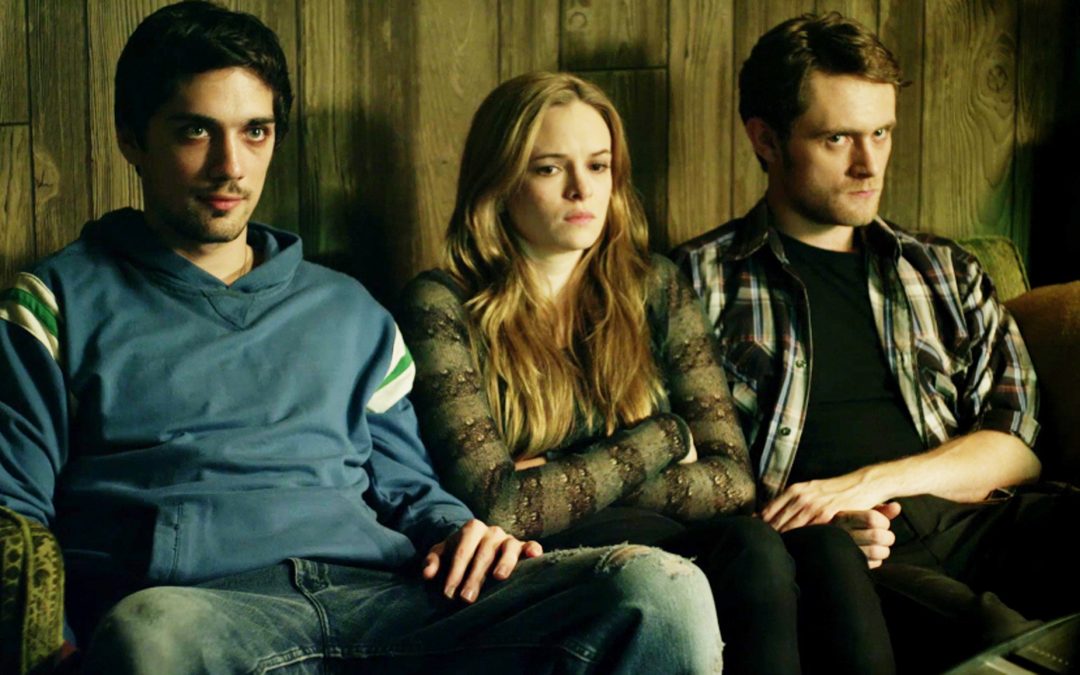
This is one of my favorite interviews, about the movie Time Lapse by Bradley King and B.P. Cooper over on the ScriptMag blog:
There’s a compelling new sci-fi feature out there right now you won’t want to miss, called Time Lapse. Co-written by Bradley King and B.P. Cooper, it’s a slow-burning thriller that hooks you with just the right touches of mystery, sci-fi technology (with a little steampunk flare), and engrossing complications that draw you forward to a surprising and intriguing climax… [read more at ScriptMag]
Photo Courtesy of XLrator Media.