‘Psycho Goreman’ Is a Wacky Homage to Campy Sci-Fi Monsters
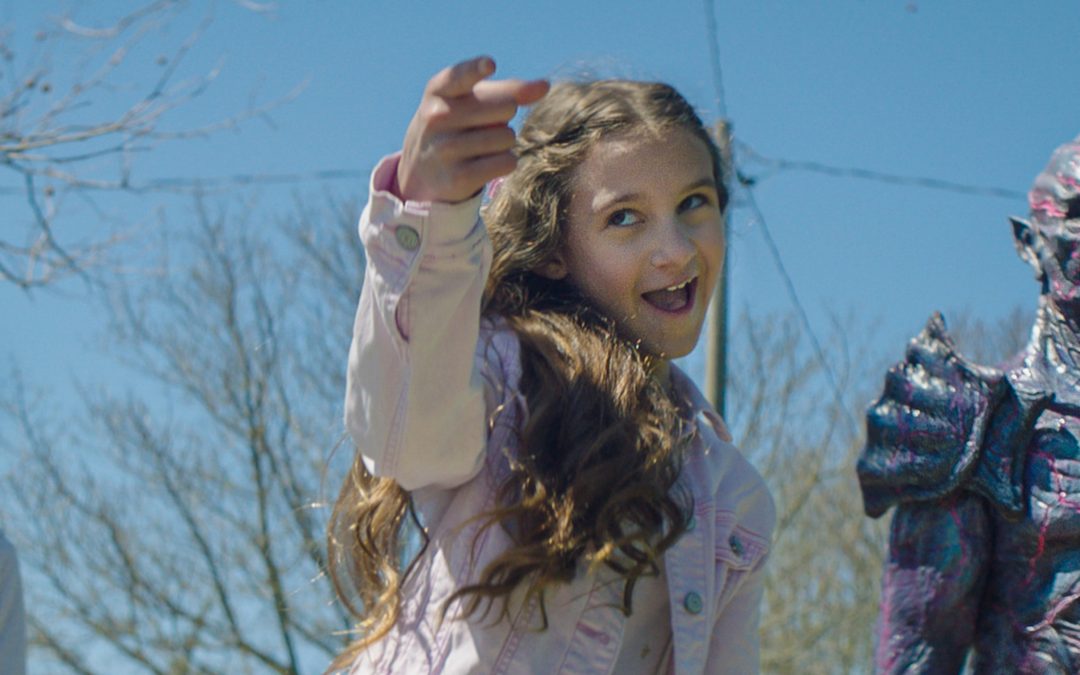
An article over on the Final Draft blog with PG: Psycho Goremanwriter-director Liam O’Donnell about his writing process, how he spends time on the visual aspects of his stories, and making monsters and aliens galore — all on a meager budget. [read more on the Final Draft blog]
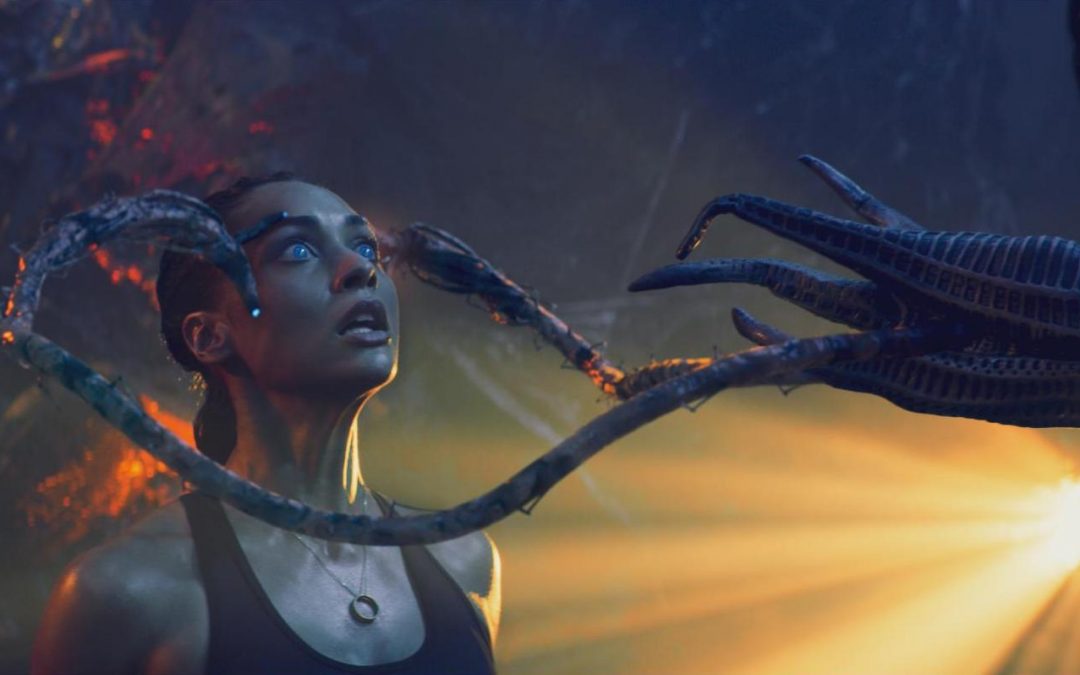
An article over on the Final Draft blog with writer-director Liam O’Donnell about how his film Skylines breaks barriers when it comes to writing sci-fi with heavy special effects for the big screen, and also bends a few trilogy story conventions as well. [read more on the Final Draft blog]
My Sci-Fi Circuit article on ScriptMag originally published on August 21, 2017.
There's a new low-budget sci-fi feature from the executive producer of Cloud Atlas called Stasis headed to iTunes and VOD on August 29th in the U.S. – and a lot we can learn from it as sci-fi writers.
I haven't seen the film yet (though it's already been released in over 30 countries), so this isn't a review.
But here's why I'm interested in the story of Stasis: When a screenwriter goes from writing on spec, to writing on assignment, to directing her own first short, to getting hired to write and direct a feature film, I'm interested.
I want to know how that happened, and how she got there.
Let's find out.
Lessons Learned from Writing and Making Stasis
Nicole Jones-Dion, image courtesy of IMDB.com
I sat down with Nicole Jones-Dion, who both wrote and directed Stasis – in record breaking time, mind you – to see what lessons we up-and-coming sci-fi writers might glean from her experience.
Nicole and I are friends and colleagues from our days studying at ScreenwritingU together, so it was a treat to get to chat with her.
Nicole's first directorial project was Devil's Deal, a short she co-directed with a colleague, and also wrote.
Her second was Debris, a short horror film about an ancient and cursed samurai blade, a passion project she crowdfunded on Indiegogo.
(Full disclosure: I contributed to both projects.)
How Stasis Came to Be
Nicole was on the festival circuit with Debris, which was up for several awards, when she reconnected with Pearry Teo, a colleague of hers and an executive producer on the movie Cloud Atlas. Nicole and Pearry co-wrote Dracula: The Dark Prince, which he also directed, and Nicole wrote Tekken: Kazuya's Revenge on which he was an executive producer.
When he saw her directorial work with Debris, he asked if she'd be interested in directing a feature. "Sure," she said, "What'd you have in mind?" (This is consummate Nicole.)
Image courtesy of XLrator Media
He pitched her a YA concept he had about a young woman who sneaks out at night to party with her friends, OD's but recovers, and goes back home only to find someone who looks exactly like her sleeping in her own bed. That was it. From there, it'd be up to Nicole to write the rest of the story. She agreed to take on the project.
Three lessons to live by:
Put yourself out there. Nicole took on a project she was determined to get out into the world by writing, directing, and producing her own short, Debris, and was noticed for it.
The relationships we build over time created the opportunities for us in the future.
When opportunity knocks, say "Yes!"
Putting Together the Financing with a Poster and a Script
Image courtesy of Compound B
Since horror is where Nicole and Pearry tend to hang out, she first conceived the concept as a demonic possession but then their investors asked for a time travel take on the story, which they settled on in January of 2016.
Once they had their concept nailed down, to get the ball rolling, the investors quickly put together a conceptual poster (left, and much different than the official theatrical poster, shown above) to take to the Berlin Film Market in February to build a fan base and secure financing for the project... and Nicole had to put together a script in two weeks to meet that deadline.
As a writer, Nicole said she was struck by how "all you need is a concept and a poster – that’s how films are bought and sold."
Two lessons to live by:
Because viewers often decide whether or not to watch a film on the basis on a poster and a concept (and trailer), it's not surprising that films are sold on that basis, not as much on the basis of the script. And though that can be disconcerting for a writer, it's an invaluable lesson when it comes to understanding the marketplace.
Be ready to write... fast!
Image courtesy of XLrator Media
A Breakneck Timeline
Then, once the financing was in place, Nicole started planning the shoot. She was told originally she'd have 24 days. Then 18. Then 12.
The timeline was short both for budget reasons and to be ready to preview a teaser trailer in May at the Cannes Film Festival. Their first three days of shooting were used to compile that teaser.
As a first-time director, she "didn’t realize how ridiculous that was." She says, "Most movies get three to four weeks. People who make films in this budget range keeping asking how I pulled it off."
Her answer? "An amazing cast and crew."
Nicole is proud of what they accomplished with this film, particularly given the incredibly tight time frames she was given to work with.
Two lessons to live by:
Marketing and budget drive a lot of how a film gets put together, shot, and produced and can have a big impact on a film.
Look at what you ARE able to accomplish with the resources you have, not at what you can't or didn't do.
Image courtesy of XLrator Media
Shooting the Film
Nicole and crew shot the film in May of 2016 in the Arizona desert.
They were plagued with a variety of challenges, haunted sets with shadow people, LED costume batteries dying far too rapidly, injuries, proximity to favored locations for drug runners near the Mexico border, and more, but at the end of it all, Nicole has a positive attitude about the crew and the project as a whole, focusing on learning from what went wrong, understanding the process, and making the most of the opportunity.
A lesson to live by:
No matter what happens, have a good attitude and learn from your experiences.
Image courtesy of XLrator Media
On Matching Up the Marketing
Image courtesy of Compound B
Although a typical convention in YA is to have a love triangle between girl and two guys, Nicole comments that the marketing campaign made some interesting choices, “focusing on the sci-fi elements rather than the YA love story.”
The international poster (to the right) emphasizes "the metaphysical / supernatural aspect where one of the characters is essentially a ghost,” whereas the U.S. poster, marketing, and trailer make it look "a lot more like a big action film," she says.
Despite the differences in the marketing, the film seems to be "finding an audience," as Nicole says, and it's ranking well in IMDb. "It was #317 last week on IMDb," she said at the time of our interview, "...still in top 500. I'm interested in how that's happening, so I can recreate it next time."
Anna Harr, image courtesy of IMDB.com
And so far, the film has fans. Nicole is being messaged privately by people saying they how much liked it. The actors are "getting flooded with fan mail," especially Anna Harr, who plays two lead roles in the feature film and is in practically every scene.
Nicole suspects a lot of the interest is the connection with Pearry as an executive producer on Cloud Atlas, as well as Anna's resonance with and appeal to teens, which is film's the target demographic.
A lesson to live by:
Learn everything you can from what's working.
Image courtesy of XLrator Media
Walking Both Sides of the Fence
After working on this project, Nicole says she's now even more aware than before of the critical business decisions that go into writing a script.
This means being conscious of writing trailer moments, writing roles for A-list actors (no matter who is ultimately cast), giving the protagonist zingy one-liners, and imagining the marketing as she writes.
"As writers," she says, "we tend to ignore and take it for granted, but filmmaking is both an art and a business. All those elements that go into place and make it more salable. It's our job to walk both sides of fence. To make art, tell creative compelling stories, and make money back for our investors."
A lesson to live by:
Filmmaking is both an art and a business.
Image courtesy of XLrator Media
Wide Open Spaces for Sci-Fi Screenwriters
Since sci-fi tends to be realm for big budget, Nicole sees a "pent up demand for films like Ex Machina and Moon." She sees the low budget space as being a "wide open," underserved market for sci-fi.
She also notes that while comparisons between Stasis and The Terminator are inevitable because there's a time traveling character in the story much like The Terminator, she sees it as a loving homage to sci-fi classic that brings in a supernatural element too. It's more like "Terminator meets Ghost" for teens.
Her advice for sci-fi writers, is to "know your genre, be aware of things that have been done before, and try to bring something original to it. Make it your own somehow. Make the most of it."
Lessons to live by:
Look for the opportunities in the marketplace and be the one to jump in and fill them.
Bring your originality to your work, even if there are echoes and homages to other stories.
Image courtesy of XLrator Media
What’s Next for Nicole
For Nicole, horror is her bread and butter. She's just optioned The Elevator Game, and is working on other horror scripts, and possibly other low-budget sci-fi scripts as well.
My Sci-Fi Circuit article on ScriptMag originally published on December 20, 2013.
If you've been following this column for a while, you'll have seen the many recommendations about focusing on writing low-budget spec scripts from both screenwriting gurus like Chris Soth and Scott Myers, as well as sci-fi screenwriters who have been successfully breaking into the sci-fi market, like Dan Gordon and Shane Joseph Willis.
Since my personal sci-fi palate has always tended toward the higher budget range (epic spaceship battles and the like), I've been making a point to check out lower budget movies ($5 million or less) like Moon, Sleep Dealer,Another Earth, and Safety Not Guaranteed.
In my opinion, all four delivered well-executed stories -- and definitely on a low budget. Let's take a look at them here, from highest to lowest in terms of budget.
Moon
In Moon, Sam Rockwell stars as "Sam Bell," an isolated helium-3 miner about to complete a three-year tour of duty on the far side of the moon. His only company is a robot GERTY (voiced by Kevin Spacey), and he suffers greatly from faulty communications with Earth which only allow him to send one-way messages to his wife.
As his stint comes to a close, Sam begins hallucinating and having increasingly bizarre experiences, and ultimately discovers unexpected information about the true nature of his assignment.
What makes Moon shine as a sci-fi story is its unusual and isolated setting, compelling acting, and intriguing food-for-thought twist at the end.
Moon was co-written by director Duncan Jones and screenwriter Nathan Parker. They set out to keep the budget limited to $5 million by limiting the cast size and filming in a studio (source: Wikipedia). The movie grossed $9.7 million worldwide and won many awards.
Sleep Dealer
Sleep Dealer is a fascinating study in low-budget sci-fi. Although it didn't perform well in the box office (perhaps because it was only released in 18 theaters), as a sci-fi story I thought it deserved more attention.
It's an intriguing tale of Mexican workers doing grunt work across the border in the United States via remote controlled robots. They're connected to their alter-egos through a network accessed by cables implanted into their backs and arms. Just as Mexican migrant workers perform many of today's heavy labor tasks, so do these workers -- but from a place "safely" across the border, where they are worn out by their late night hours, desperate to make an income.
Of the four films, Sleep Dealer is the one that truly tackles social commentary in the way sci-fi is known for.
Another Earth
Another Earth embodies a simple sci-fi concept that's well-executed: What if there was another Earth, and an identical copy of you was present on that mirror planet?
A young woman, played by actress Brit Marling, struggles to redeem a horrific mistake -- a drama playing out under the glow of this duplicate, mirror Earth. When she realizes there's a chance for redemption tied to the duplicate planet, she enters an essay contest to try to win a civilian ticket to the mirror world.
The budget for Another Earth was a $750,000, brought in $1.7 million in the box office, and won awards.
What made the movie so powerful were the tragic circumstances the character created and her painful path to try to recover from them. The sci-fi element of the story was always present -- the second Earth was a constant backdrop -- but that was the only visual effect necessary. The story felt like science fiction primarily through implication, which I thought worked brilliantly.
Safety Not Guaranteed
In Safety Not Guaranteed, a young magazine intern, Darius, played by Aubrey Plaza, gets picked by one of the magazine writers to go with him and another intern to research the story behind a classified ad that reads:
"Wanted: Somebody to go back in time with me. This is not a joke. P.O. Box 91 Ocean View, WA 99393. You'll get paid after we get back. Must bring your own weapons. Safety not guaranteed. I have only done this once before."
What makes this movie so terrific are the kooky, ever-so-slightly-over-the-top characters and Darius's growth arc from her reluctance to enjoy life to a more go-for-it spirit. As in Another Earth, the actual sci-fi element is there primarily through conversation and implication: Is this time travel guy for real, or not? Delightfully, you don't discover the answer until the very end. (And I'm not going to tell you what it is, either.)
The budget for Safety Not Guaranteed was a mere $200,000 and it grossed over $4 million, making it the most financially successful of the bunch. The movie also won several awards.
Budget-Box Office Comparison
Let's take a look at how the four movies compared in terms of budget and box office. Isn't it fascinating that the lowest budget performed the best at the box office, relative to its budget?
So what can we take away from all this?
Keep the budget low by keeping it simple. One idea, well-executed, can go a long way.As Chris Soth said in one Sci-Fi Circuit column, "Stick to one 'What if?' or change and play out the unexpected consequences of it."
Sci-fi aspects can be minor background elements and still significantly impact the tone and genre. Although Safety isn't even listed in IMDB as "sci-fi" -- and it arguably isn't -- the sci-fi tweak on the story was what hooked me and kept me wondering throughout.
Great roles and great acting still count, even in the low budget market -- and perhaps more so. Every single one of these movies had compelling story lines, stakes, and characters.
A limited cast size can help keep the budget low too. Each of these movies had just a few core characters: One in Moon, three in Sleep Dealer, two in Another Earth, and two to four in Safety (depending on how you count).
Sci-fi is everywhere. I'm struck by how much sci-fi material is out there for the taking with a little creative brainstorming and a willingness to see it through. And it doesn't require complex world-building, alien races, or advanced technology to make the sci-fi magic we know and love. How cool is that?